
Kelsey Easton August 24, 2026
Buying a waterfront home on Lake Austin is unlike buying almost anywhere else in Central Texas.
The home itself matters, of course. But when I am evaluating a Lake Austin property with a buyer, some of the most important questions have very little to do with the finishes inside the house.
How much usable waterfront does the property have? Is the shoreline on the main body of the lake or protected within a cove? How steep is the lot? What does the existing dock permit allow? Is the bulkhead in good condition? What can actually be rebuilt or expanded? Which school district serves the property? And, perhaps most importantly, how difficult would it be to recreate what already exists?
Those details can materially change both the lifestyle and long-term value of a Lake Austin property.
With only a limited amount of true waterfront inventory, and many of Austin's most valuable residential properties located along its shoreline, Lake Austin occupies its own category within the Austin luxury real estate market.
Lake Austin is a relatively narrow, controlled-level reservoir stretching between Mansfield Dam and Tom Miller Dam. LCRA generally maintains Lake Austin within a target elevation range of approximately 491.8 to 492.8 feet above mean sea level.
Unlike Lake Travis, where lake levels can fluctuate dramatically with drought and rainfall, Lake Austin operates as a pass-through reservoir and typically stays close to its normal operating range. For waterfront homeowners, that generally creates a more consistent experience for docks, boat lifts and shoreline access. It also creates scarcity. There simply isn't much Lake Austin waterfront to own, particularly when you narrow the search to properties with a desirable combination of usable shoreline, privacy, relatively flat topography, a substantial permitted boat dock, convenient access to Central Austin and strong schools. That is why two homes with similar square footage can have dramatically different values.
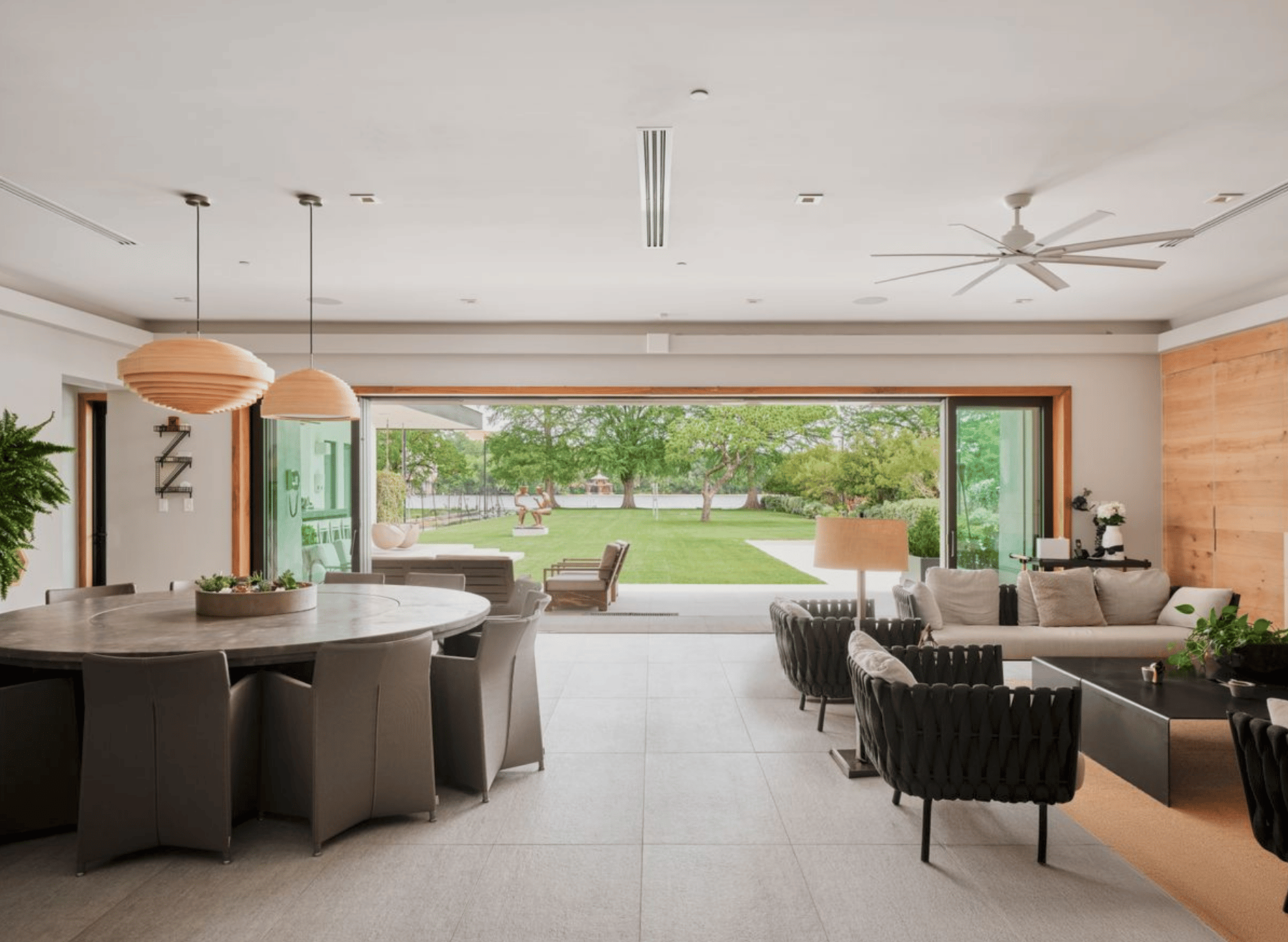
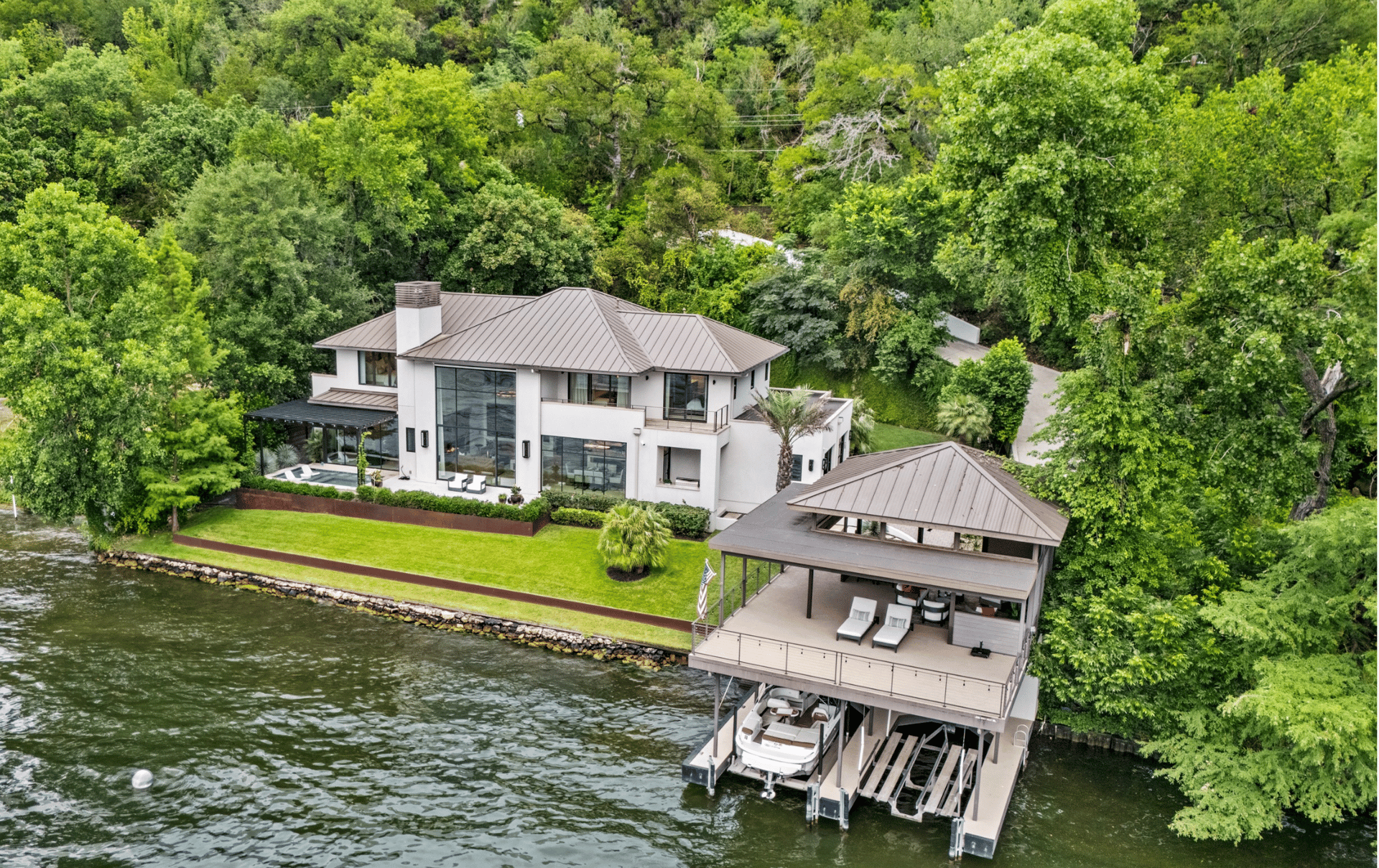
On Lake Austin, you aren't just buying the house. You're buying the land, the frontage, the water access, the dock rights, the view corridor and the location along the lake.
Lake Austin has increasingly become the benchmark for the very top of Austin's luxury real estate market. In 2025, four of Austin's ten highest residential sales were located along Lake Austin, including the highest sale of the year at $16.9 million. That concentration at the top is significant: while Austin has several established luxury markets, from West Lake Hills and Barton Creek to Spanish Oaks and downtown penthouses, Lake Austin continues to produce some of the city's most valuable residential sales.
For buyers, there isn't one meaningful "average price" for true Lake Austin waterfront because the properties are simply too unique. Entry-level opportunities with direct frontage and significant compromises can begin in the several-million-dollar range, while exceptional waterfront estates routinely reach $10 million and above, with trophy properties pushing well into the teens and beyond. Current offerings have continued to test the upper end of Austin pricing, particularly for estates combining acreage, substantial shoreline, privacy, and significant existing boat docks.
What drives that premium is something Austin's other luxury neighborhoods can't fully replicate: scarcity of waterfront land. A beautiful luxury home can be built in many parts of Austin, but the supply of privately owned Lake Austin shoreline is effectively fixed. Properties with flat, usable land, significant waterfrontage, desirable dock rights, privacy, and convenient access to Central Austin are rarer still. That's why I encourage buyers to evaluate Lake Austin differently from the broader luxury market—the long-term value is often tied as much to the land, frontage, and waterfront rights as it is to the home itself.
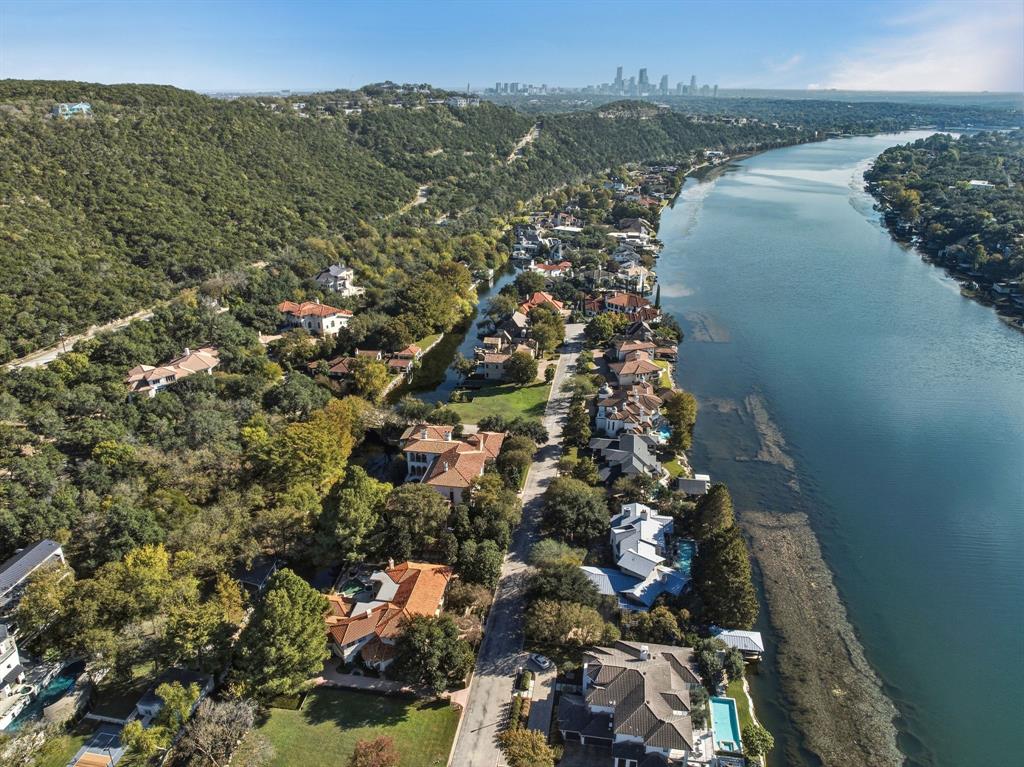
One of the biggest misconceptions among relocating buyers is that "Lake Austin" represents a single neighborhood. It doesn't. Lake Austin stretches through several very different residential pockets, and the experience can change considerably depending on which part of the lake you choose.
For buyers looking for the combination of Lake Austin waterfront, proximity to downtown, and access to Eanes ISD, the Westlake side of the lake is usually one of the first places I look. The Westlake Drive corridor contains some of Austin's most valuable waterfront real estate, ranging from older homes positioned primarily for their land value to newly constructed estates and private compounds. The appeal is straightforward: you can have a boat dock in your backyard while remaining remarkably close to downtown Austin.
Inventory, however, is extremely limited. This portion of the lake tends to command a premium for properties with flatter lots, substantial waterfrontage, mature trees, and high-quality existing docks. Eight-figure pricing is not unusual for exceptional estates, while properties with compromises in topography, improvements, or waterfront usability can trade substantially below trophy-property pricing. For families, Eanes ISD and Westlake High School are also significant drivers of demand.
Rivercrest is one of my favorite pockets for buyers who want a more residential, established Lake Austin lifestyle. The neighborhood sits along the west side of the lake near Bunny Run and includes larger properties, mature trees, and a mix of renovated homes, newer construction, and legacy Austin estates. Not every Rivercrest home is directly waterfront, but the neighborhood's proximity to the lake and community access make it particularly desirable. Compared with some of the more dramatic hillside properties around Lake Austin, certain Rivercrest lots also offer something luxury buyers often underestimate until they start touring: usable land. A flat backyard leading naturally toward the lake can be more valuable from a lifestyle standpoint than additional interior square footage.
A limited collection of properties along River Hills Road and several smaller pockets offer true Lake Austin frontage, including estates with private docks, while many surrounding Cuernavaca homes offer neighborhood lake access rather than private waterfront. The area is known for larger wooded lots, a more relaxed Hill Country feel, and Eanes ISD, often at a different price point than comparable waterfront closer to West Lake Hills and Central Austin.
Rob Roy on the Lake is one of the more private and understated luxury enclaves along Lake Austin, and an important community to distinguish from Rob Roy proper. Located west of Loop 360 in the Eanes ISD area, Rob Roy on the Lake is a separate residential enclave made up of estate properties tucked into the hills above and along Lake Austin. The neighborhood is known for large lots, mature trees, privacy, and a much lower-density feel than many of Austin's closer-in waterfront neighborhoods. The waterfront properties here can be particularly impressive. Certain estates offer multiple acres, substantial stretches of Lake Austin shoreline and private boat docks. One recent waterfront offering on North Weston Lane, for example, included more than 11 acres and approximately 470 feet of main-body Lake Austin frontage, illustrating just how different the scale of property can be here compared with waterfront closer to Central Austin. Topography is an important consideration in Rob Roy on the Lake. Some properties sit elevated above the water, creating exceptional Hill Country and Lake Austin views but a very different relationship with the shoreline than a flat Westlake Drive or Rivercrest property. The neighborhood is also compelling for buyers who want Eanes ISD, acreage and privacy without going as far upriver. Inventory is exceptionally limited, and the best waterfront properties may not trade frequently enough for traditional neighborhood averages to be particularly meaningful. Here, acreage, usable waterfront, topography, dock rights, privacy and the quality of the existing improvements matter far more than a neighborhood-wide price per square foot.
As you move toward the lower lake and Tom Miller Dam, the character changes again. Areas around Mount Bonnell, West Austin and portions of the Lake Austin Boulevard corridor put buyers exceptionally close to Central Austin. True private single-family waterfront becomes increasingly scarce here, which is precisely why the best parcels command such a premium. This area can be ideal for buyers who prioritize downtown proximity, architecture and central Austin lifestyle over acreage. School assignments on this side of the lake generally fall within Austin ISD and vary by address, so buyers should verify the current attendance zones for any property they are considering.
One of the most interesting enclaves is The Island at Mount Bonnell Shores, where homes are surrounded by Lake Austin and canal-style water access. The experience is more intimate and residential than the expansive estate properties farther upriver.
Scenic Drive is one of Austin's most recognizable luxury addresses and represents an entirely different version of Lake Austin living. Here, the appeal is less about sprawling waterfront acreage and more about location, views, architecture, and extreme scarcity. Tarrytown itself has very little true single-family Lake Austin frontage. As a result, when a well-positioned waterfront or water-access property becomes available, it can attract attention far beyond what conventional neighborhood comparables would suggest. This area is also zoned to the exemplary and prestigious Casis Elementary. For buyers who want to be minutes from downtown, Clarksville, and Central Austin while still having a connection to Lake Austin, this is one of the most coveted areas to watch.
Greenshores, located off City Park Road, offers another alternative. The community is farther from downtown than Westlake or Tarrytown, but buyers can gain more space, gated options, and access to Lake Austin in a neighborhood designed around the lake lifestyle. Some properties are directly waterfront while others benefit from community lake amenities. For buyers who value privacy and space more than a ten-minute downtown commute, Greenshores can make sense, particularly when compared with the cost of similarly substantial waterfront property closer to Central Austin.
Not every Greenshores home is waterfront. Some properties have direct Lake Austin frontage while others rely on neighborhood lake amenities, so again, the distinction between waterfront, water view and water access matters.
The upper portion of Lake Austin near Steiner Ranch offers yet another version of waterfront living. This is where buyers can find genuinely exceptional estate properties: multi-acre lots, long stretches of shoreline, substantial boat docks, and, in certain locations, views toward protected land across the water. The trade-off is distance. You're considerably farther from downtown Austin, and school zoning is different from the Westlake side of the lake. Many Steiner Ranch addresses are served by Leander ISD, something relocating buyers occasionally assume incorrectly because of the property's proximity to Lake Travis. If you stay within the Steiner Ranch Elementary zone, the typical public-school path is Steiner Ranch Elementary → Canyon Ridge Middle School → Vandegrift High School, with Vandegrift being especially well regarded for academics, athletics, and extracurriculars. Most Steiner Ranch homes are also not waterfront. Lake Austin frontage represents a small and highly specialized segment of the community.
At the upper end of Lake Austin, Bellagio Estates is one of the most distinctive gated waterfront enclaves in Steiner Ranch. Located at the end of Flat Top Ranch Road, Bellagio is made up of large custom estates on multi-acre homesites with substantial direct Lake Austin frontage. Many properties have approximately 150 to 500 feet of shoreline, and private two-slip boat docks are common. This is a very different product from what many buyers picture when they hear "Steiner Ranch." Rather than a traditional master-planned neighborhood lot, Bellagio feels much more like a collection of private lakefront compounds. The acreage is a major differentiator. Properties in Bellagio can offer two, three, or more acres, allowing for substantial lawns, pools, outdoor entertaining areas, guest accommodations, and a level of separation between neighboring homes that is difficult to find closer to downtown. Some individual Bellagio estates also utilize Lake Austin water for landscape irrigation, an interesting feature on properties with several acres of lawn. although water rights, irrigation systems and applicable regulations should always be verified on a property-by-property basis. Another important distinction is utilities. Bellagio properties have access to Municipal Utility District services, including sewer, which can simplify development considerations compared with Lake Austin properties that rely on private septic systems. From the water, Bellagio also feels different from lower Lake Austin. It sits near Mansfield Dam on the upper end of the lake, where the water tends to be cooler and the setting feels more removed. For a buyer who wants acreage, privacy and boating directly from the backyard, and doesn't need to be ten minutes from downtown, Bellagio is one of the most compelling options on Lake Austin.
There isn't a particularly useful "median price" for Lake Austin waterfront. The properties are simply too different. A steep property with limited usable shoreline and an older residence is not truly comparable to a flat two-acre estate with 200 feet of frontage and a substantial permitted boathouse- even if the houses happen to contain the same number of bedrooms. Broadly, true Lake Austin waterfront can begin in the several-million-dollar range for properties with meaningful compromises and extend well into eight figures for exceptional estates.
The most valuable properties typically combine several attributes:
For buyers looking above approximately $5 million, I would not rely solely on public listings to understand the market. Lake Austin has a meaningful private and off-market luxury market, and some of the most relevant comparable sales may not show up on consumer real estate portals.
Historically, one of the strongest arguments for Lake Austin real estate is scarcity. Austin can build more homes. It can build more luxury homes. It can even create new luxury communities. It cannot create another Lake Austin shoreline ten minutes from downtown. That does not mean every waterfront property automatically appreciates, or that price is irrelevant. Luxury real estate is still sensitive to market cycles, condition, and overpricing. But the best Lake Austin properties possess characteristics that are permanently supply constrained: substantial frontage, flat land, mature trees, privacy, high-quality dock rights, and close-in location. In my experience, those are the properties that tend to maintain the strongest buyer demand over time. I tell buyers to think less about whether they are buying the "nicest house" and more about whether they are buying real estate that will be difficult, or impossible, to reproduce. You can remodel a kitchen. You cannot add another 100 feet of Lake Austin shoreline.
When comparing Lake Austin properties, one of the first numbers I want to know is the property's linear feet of waterfront. A property with 60 feet of shoreline and a property with 200 feet should not be valued as if they are interchangeable simply because their houses are similar. More frontage can create greater privacy, better views, additional separation from neighboring docks and, depending on the site and regulations, more flexibility in how the waterfront is used. You also need to look at the shape of the shoreline, water depth, existing dock placement, neighboring docks, trees, topography, and whether the property sits along the main channel, a canal, or a protected cove.
Main-body Lake Austin frontage tends to offer wider views, more visual drama, and immediate access to boating. The trade-off can be more boat traffic and wake exposure.
Cove waterfront can offer calmer water, more privacy, and a quieter backyard experience. Depending on the location, however, buyers should pay close attention to water depth, vegetation, and ease of navigation.
For serious boaters, I also want to understand how quickly you can get from the property to the parts of Lake Austin you expect to use most. A waterfront property can look perfect on a map and feel completely different once you experience it from the water.
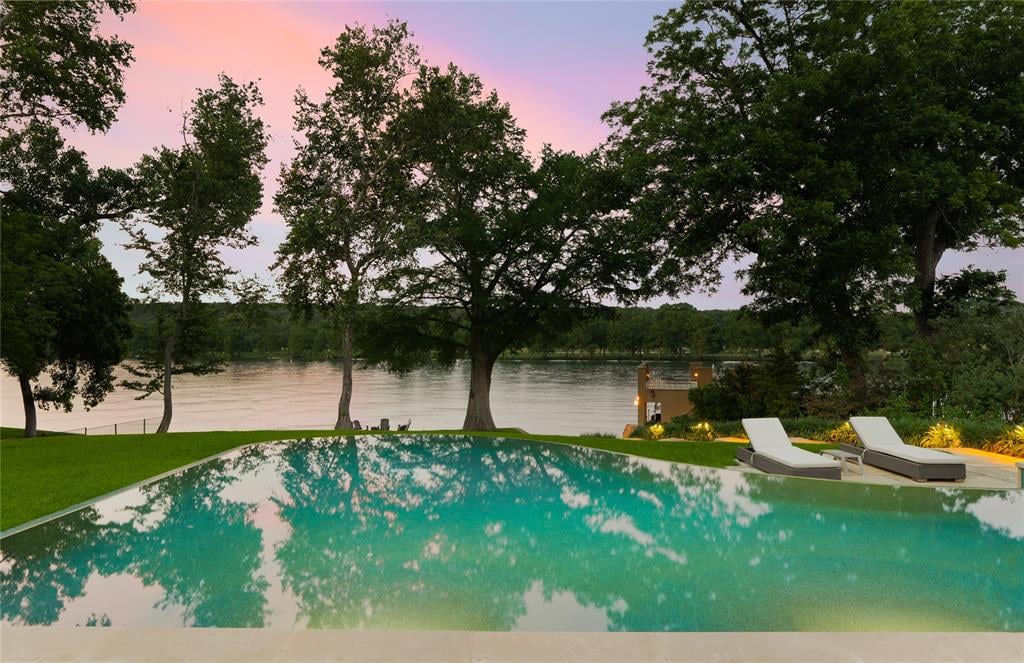
Topography is one of the biggest value drivers on Lake Austin. Many lake properties are steep. That can produce incredible views, but it can also mean extensive stairs, retaining walls, hillside construction, trams or elevators, and significantly higher construction costs. For families with young children, buyers who entertain frequently or anyone who imagines walking barefoot from the pool to the dock, a flatter lot can completely change the experience. Flat waterfront is scarce. And scarcity is why I pay close attention to it when advising buyers about long-term value.
This is where Lake Austin real estate becomes much more technical. A beautiful waterfront lot does not automatically mean you can build the home you have in mind. Before buying land for new construction, buyers should investigate:
Zoning and platting history. Lake Austin-area development rules can depend on the property's zoning, when the lot was platted and other site-specific conditions.
Shoreline setbacks. Lake Austin regulations include specific shoreline protections, and development rights near the water are significantly more restrictive than on a typical Austin residential lot.
Impervious cover. The amount of land that can be covered by structures, driveways, pools and other improvements can be heavily influenced by zoning and slope.
Slope. Steep portions of a site can materially affect both buildability and construction cost.
Protected and heritage trees. Mature trees are part of what makes Lake Austin properties beautiful, but they can also influence the placement of a house, driveway, pool and shoreline improvements.
Wastewater. Some lake properties use septic or other on-site wastewater systems rather than conventional sewer connections. This should be verified early, not after architectural plans have been completed.
Shoreline improvements. Bulkheads, stairs, retaining structures, docks and other improvements near the lake can require separate reviews and permits.
For a serious waterfront lot buyer, I recommend completing a feasibility period with the appropriate architect, civil engineer, environmental professionals, and permitting consultants before treating the lot as buildable for a particular design. The question isn't simply, Can I build a house here? It's:
Can I build the house I actually want, in the location I want it, while preserving the waterfront experience that made me want the property in the first place?
Boat docks are one of the most misunderstood, and potentially valuable, parts of Lake Austin ownership.
Lake Austin boat docks are regulated through the City of Austin development process, and an approved site plan or qualifying site plan exemption is generally required before obtaining the applicable building permit for regulated dock work. Current regulations limit the size and dimensions of residential docks, including a maximum total footprint of 1,200 square feet and limits on how far a dock can extend into the lake. This makes an existing, legally constructed dock particularly important.
Before purchasing, I recommend verifying:
This matters because repairing an existing dock differs greatly from substantially rebuilding or expanding one. The City currently allows certain limited maintenance and repairs through a Site Plan Exemption, while structural changes, demolition, new construction, and expansion generally require a full Site Plan Permit. In other words, don't assume: "I'll just replace the dock later." Before buying, understand exactly what exists and what you're allowed to replace.
The bulkhead is much less glamorous than the boat dock, and potentially much more expensive to ignore. A failing shoreline retaining system can create erosion, structural issues, and a significant future project. I look for movement, cracking, deterioration, erosion behind the wall, and previous repairs, but waterfront buyers should have the shoreline evaluated by the appropriate specialist when concerns exist. The City's current rules also distinguish between limited bulkhead repairs that may qualify for a Site Plan Exemption and larger repair or replacement projects requiring a Site Plan Permit. For a multi-million-dollar lake purchase, this is due diligence worth doing.
If you've been boating on Lake Austin recently, you've probably noticed considerably more aquatic vegetation. The primary concern is hydrilla, an invasive aquatic plant that can form dense underwater growth and interfere with boating and shoreline use. According to the City's most recent published information, a June 2026 Texas Parks and Wildlife survey identified approximately 575 acres of hydrilla in Lake Austin, along with approximately 75 acres of Eurasian watermilfoil.
The City has been managing hydrilla carefully because previous aggressive control efforts had unintended consequences for Lake Austin's aquatic ecosystem. In May 2026, Austin Watershed Protection stocked an additional 2,790 sterile grass carp in the lake, bringing the estimated stocking density from approximately five to eight fish per acre of hydrilla. The goal isn't to eliminate every aquatic plant. Healthy aquatic vegetation plays an important role in water quality and fish habitat. The objective is balance. For waterfront buyers, hydrilla should therefore be part of the property-specific conversation. Conditions vary significantly depending on where you are on the lake, and vegetation can be particularly relevant in coves, canals, and portions of the upper lake.
On August 20, 2026, the City of Austin and Lower Colorado River Authority announced a planned drawdown of Lake Austin from October 12 through November 30, 2026. LCRA plans to lower the lake approximately 10 feet, with a target range of approximately 481.8 to 482.8 feet above mean sea level. The drawdown is being conducted primarily to provide shoreline property owners and City departments with better access for maintenance of docks, bulkheads, boat slips, and other shoreline infrastructure. The lake will be lowered gradually, and LCRA has indicated the schedule could change if water-supply, flood-management or electric-reliability conditions require it. Public boat ramps are expected to close during the drawdown, and swimming at Emma Long Metropolitan Park will be prohibited while the lake is lowered.
Interestingly, this fall may create one of the best due-diligence opportunities Lake Austin buyers have had in years. At normal lake level, you cannot easily see everything happening below the waterline.
During the drawdown, buyers may have an unusual opportunity to visually evaluate portions of:
That doesn't replace a professional inspection, but it can reveal conditions that are normally hidden underwater. If I were buying Lake Austin waterfront this fall, I would absolutely want to see the property both from the land and from the water, or exposed shoreline where appropriate, during the drawdown period.
School district is another reason Lake Austin values can vary dramatically from one side of the water to another. Depending on the address, waterfront properties may be served by Eanes ISD, Austin ISD or Leander ISD. The Westlake and 78733 portions of the lake are particularly sought after by families seeking Eanes ISD. Other central waterfront pockets can fall within Austin ISD, while portions of the upper lake around Steiner Ranch are served by Leander ISD. Attendance boundaries can change, so school assignments should always be verified directly for the individual property rather than assumed from the neighborhood name. Even for buyers who don't have school-aged children, school district can matter because it influences the future buyer pool and, consequently, resale demand.
Lake Austin generally offers greater proximity to Central Austin, a more consistent water level, extremely limited waterfront supply and some of the city's most prestigious residential addresses.
Lake Travis is dramatically larger and offers a different lake experience, with more shoreline communities, marinas, expansive open-water views, and a wider range of waterfront price points. But its water level can fluctuate considerably depending on rainfall and drought.
For a buyer who wants to leave downtown, be on their boat shortly afterward, and return home to a private dock, Lake Austin is difficult to replicate. For someone who wants expansive water, resort-style communities or more waterfront options at different price points, Lake Travis may make more sense. They are both exceptional Austin lifestyles. They are simply different real estate markets.
Before purchasing a Lake Austin home, I want answers to at least these questions:
That final question is where knowledgeable representation matters most.
For the right property, I believe the investment case for Lake Austin remains compelling because the underlying supply is inherently limited. The strongest Lake Austin real estate has attributes that cannot easily be manufactured: excellent frontage, usable land, privacy, desirable dock rights, mature trees, favorable topography, strong views, and proximity to the parts of Austin buyers value most.
Those characteristics are what I focus on when helping clients evaluate both current value and long-term resale. The finishes inside a luxury home can always change. The land cannot.
Valuing a Lake Austin waterfront home is very different from valuing a traditional Austin property. Price per square foot can provide context, but it rarely tells the entire story. On the lake, some of the most valuable features aren't inside the house at all.
When I evaluate a Lake Austin property, I look closely at linear feet of waterfront, usable acreage, topography, water depth, dock and permit history, bulkhead condition, privacy, view corridors, school district, utilities, proximity to downtown and how easily the home connects to the water. A relatively flat property with 150 feet of usable shoreline and a substantial permitted boat dock can command a very different premium than a larger or newer home on a steep site with limited access to the lake. What would be difficult or impossible to recreate today also has value. Mature trees, significant shoreline, an established dock, favorable topography, and large estate-sized parcels are inherently scarce. In some cases, an older home sitting on exceptional land can be more valuable than a newer home on a less desirable waterfront parcel.
There is another complication that is particularly important for Lake Austin homeowners: not every relevant luxury listing or sale is visible on Zillow or other public real estate websites.
Privacy is highly valued at this level of the market, and some Austin luxury properties are marketed privately, shared directly between agents and qualified buyers, or introduced through brokerage networks such as Compass Private Exclusives before, or instead of, being broadly marketed online. As a result, the homes you see when searching Zillow may represent only part of the competitive landscape. That matters for sellers because an automated valuation or a quick search of publicly visible listings can miss properties that may be highly relevant to the value of your home. Texas is also a non-disclosure state, meaning residential sales prices are not generally part of the public record. For a highly unique Lake Austin property, understanding the market may require looking beyond public portals to MLS data, agent-reported sales, private-market activity, and the details of individual waterfront transactions.
For example, a neighboring property may appear online simply as "sold," while the information that really matters, its final sales price, concessions, waterfrontage, dock rights, condition and circumstances of the transaction, may not be readily available to the public.
This is one reason I am cautious about broad online estimates for Lake Austin real estate. The fewer truly comparable properties there are, the less reliable an automated valuation becomes. A Zestimate can't walk the shoreline, evaluate whether 200 feet of frontage is actually usable, understand the value of a legacy boat dock, or know that the estate down the lake quietly changed hands outside the public-facing market.
For Lake Austin sellers, determining value should therefore go well beyond pulling three nearby sales and calculating an average price per square foot. I want to understand what has sold publicly, what has traded privately, what is currently being offered off-market, and how the specific characteristics of those properties compare with yours.
That fuller picture can reveal something a public home search may not: your Lake Austin property may be competing in, and valued within, a market you can't fully see online.
Lake Austin is one of the most specialized residential markets in Austin.
A property's value may be influenced just as much by its waterfrontage, dock rights, topography, permitting history, and shoreline condition as by the house itself. And because a meaningful portion of Austin's luxury market trades privately or through agent networks, understanding what has actually sold, and why, is critical.
If you're considering buying a Lake Austin waterfront home, purchasing a waterfront lot, or selling a Lake Austin property, I can help you evaluate the property beyond what appears in the listing.
For buyers, that means identifying public and private opportunities, evaluating comparable waterfront sales, researching permit history, and assembling the right professionals to evaluate the site.
For sellers, it means understanding which property attributes carry the greatest premium and positioning those features correctly for Austin's luxury buyer pool.
Kelsey Easton | Austin Luxury Real Estate
Compass | Speed & Neuren Group
Serving Lake Austin, West Lake Hills, Tarrytown, Central Austin, and the greater Austin luxury market.
Buying, selling, or just exploring? Let's connect.


September and October 2026 MLS data: where Austin luxury buyers have leverage by price tier and neighborhood, and how much is selling off market.
A line-by-line look at what a financed $1.5M Austin purchase really costs at the closing table, and who typically pays for what.
Most $1M+ Austin closings take 30 to 45 days, and cash deals can close in two weeks. Here's what controls the clock and how to keep your deal on schedule.

Rates are near 7% and sellers are cutting prices. Here is what the latest numbers mean for your leverage.

Before you list, spend money to remove buyer objections, not to add features. Here's where pre-sale dollars actually pay off on an Austin luxury home, and where they d… Read more

California buyers bring California pricing instincts to Austin- here's how to avoid paying a premium you don't need to pay.

Most luxury sellers in Austin lose money in the first 14 days on market, not at the closing table. Here's how to price, prep, and negotiate so you don't.

The calendar matters more at $1M+ than at any other price point in Austin. Here's when luxury homes actually sell fastest and for the most — and when to hold.

Here's what staging really does for a $1M+ listing, what it costs, and the handful of moves that change the number on the contract.
Get in Touch

KELSEY EASTON
2500 BEE CAVES RD WEST LAKE HILLS TX 78746